


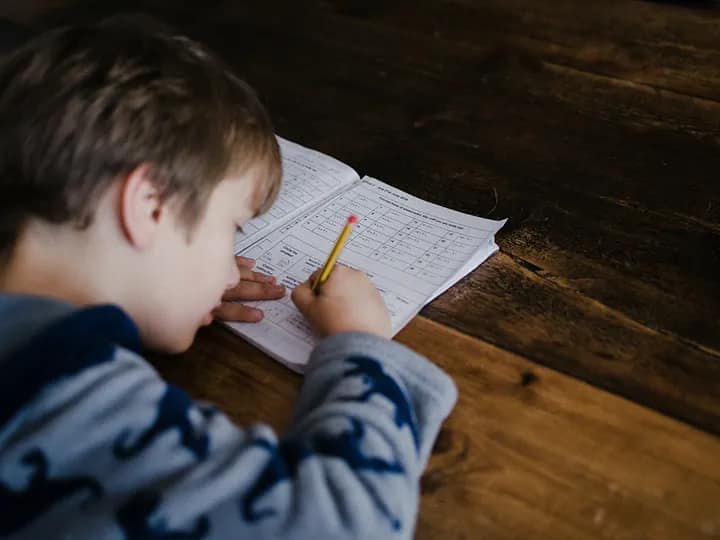
Photo by Annie Spratt on Unsplash
I’ve always been a visual learner. I need to do it to get it. Trial, error, hands-on — that’s how I’ve wired my brain over the years. I taught myself how to build a radio from scratch. I soldered my own circuit boards, built my own computers, fixed cars, and figured out how to play almost every sport I’m into — all by experimenting, breaking things, and rebuilding them. It wasn’t from sitting in a classroom — it was from trying.
And sure, I still read books and manuals. I still spent time to learn the theory behind it — why it works like that. But one of the most underrated skills is knowing how to read a manual — really read it. Whether it’s IT, LEGO, car repairs, or renovating your own home, manuals are there for a reason. Most guys skip them — let’s be honest — but the ability to slow down and figure something out properly? That’s a superpower.
Now, look at the world we live in. Everything’s changed. Kids today grow up with tools we never had — YouTube, online tutorials, Reddit threads, AI tutors, language apps. They’re learning things in days that might’ve taken us months. Back then, if we wanted to learn something, we had to go to the library — or we just had to try and fail and try again. Now, it’s all at your fingertips.
But more access doesn’t mean more learning. In fact, it often means more noise. We’re drowning in content, and not all of it is useful. Learning today isn’t just about consuming information — it’s about filtering, applying, and understanding. And that starts with knowing yourself.
Mastering Your Own Learning Process
Albert Einstein said it perfectly: “The value of a college education is not the learning of many facts but the training of the mind to think.”
Real thinking requires personal reflection. You’ve got to ask yourself: What kind of learner am I? What method actually helps me improve?
Take sports, for example. Everyone says, “Find a coach.” But most coaches teach using their one system — one method, one philosophy, and apply it to everyone. Sure, it works for some people. But others? They don’t improve, no matter how many lessons they take. And no one talks about that. They’ll show you the number of students signed up, but not how many actually got results. That part stays quiet.
And if you’ve ever asked a friend about their coach, they’ll usually say, “Yeah, they’re great.” You almost never hear someone say their coach wasn’t helpful. Maybe they don’t want to sound negative, or maybe they’re just used to the idea that the coach must know better. That’s a whole story I’ll talk about next time.
The truth is, a lot of people say they understand something — but when it comes time to actually do it, they can’t. That means they don’t really understand it yet. If you can’t apply it, you haven’t learned it. Understanding without action is just memorization.
And you know what really helps you know if you’ve learned something? Try teaching it. Teaching forces you to explain the logic behind something, not just repeat it. When you teach someone, you’re also learning again. You’re reinforcing your understanding and discovering the gaps you didn’t even know you had. If you want to know something deeply — teach it.
There’s research out there too. NCAA Division I athlete studies show that when athletes feel their coaches give them space to learn and experiment — to take ownership of the process — they perform better and learn faster. It’s not about rigid instruction. It’s about flexibility and autonomy. Let people learn in their own way, and they’ll surprise you.
We don’t come with a manual. We don’t get step-by-step instructions on how to grow, how to learn, how to evolve. We figure it out through experience — by listening to ourselves, listening to our body, observing our reactions, reflecting on our failures.
And speaking of failure — that’s one of the fastest ways to learn. When you mess something up, it stays with you. You think about it. You adjust. You get better. Sometimes, you’ve just got to tell yourself, “I can do this” and try again.
So if you’re learning something new — whether it’s a skill, a new job, or a new chapter in life — and it’s not clicking yet, don’t get discouraged. But also don’t keep forcing yourself to learn the same way that’s not working. Pause. Look at how you’re learning. Try something else. Maybe the right coach isn’t out there. Maybe you are your own coach.
Because at the end of the day, the most valuable skill you can ever develop is this:
Learn how you learn.
Understand it. Own it. Apply it.
And when you can teach it to someone else? That’s when you know you’ve really got it.
Insights, strategy, and forward-thinking IT solutions.
Visit https://www.vyings.com