


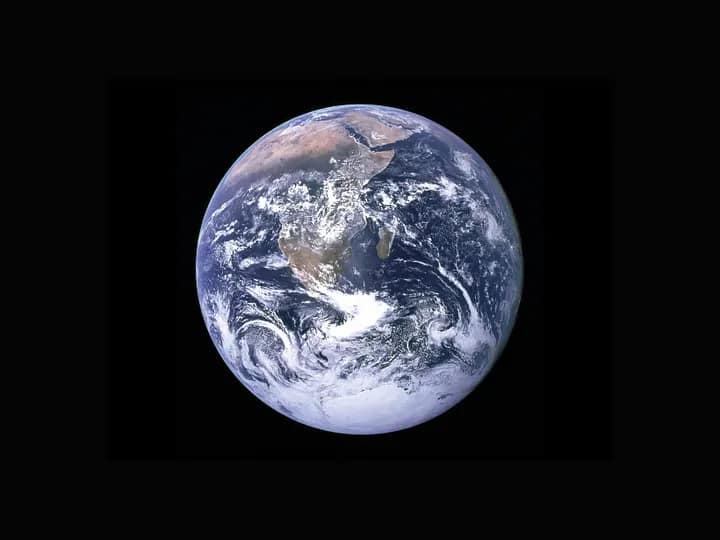
We talk about climate change like it’s a glitch we can fix.
Like a busted app we can patch.
But Earth isn’t broken.
And even if it was — we can’t fix it.
Because the Earth is not a machine.
It’s a living, breathing, chaotic system that has existed long before us and will exist long after.
It doesn’t need saving. It needs space. To breathe. To re-calibrate.
People panic about climate change as if it’s a new problem. But Earth has always changed.
With or without us.
It doesn’t matter whether you believe in evolution or in divine creation — the Earth has survived meteor strikes, ice ages, solar flares, tectonic shifts, and mass extinctions.
The last Ice Age ended because the planet warmed.
That warming made it possible for life to flourish, for humans to settle, farm, and build civilizations.
No warm-up, no us.
So yes, the climate is changing — but change is the Earth’s baseline.
What’s different now… is us.
We’ve accelerated the cycle. We pump out emissions, rip down forests, build endlessly, drain aquifers, mine deep into its crust — all to sustain a way of life that’s completely detached from nature.
We’ve thrown off the rhythm. We’ve tipped the balance.
But let’s not kid ourselves — not every solution is honest.
There’s a whole economy built around pretending to fix things.
Just like the government says they’re coming to help.
We slap on paper straws, buy carbon credits, install solar panels on 5,000-square-foot homes in overbuilt suburbs, and call it “green.”
We invent slogans, market fear, and package hope — then sell it back to ourselves at a profit.
Because there’s big money in “saving the planet.”
Electric cars aren’t new. They were around over a century ago, but the technology wasn’t there — specifically, the batteries. Now that battery technology has improved, they’re making a comeback. But let’s not pretend it’s without cost. The environmental burden hasn’t disappeared; it’s just been shifted. We mine rare earth metals, build massive batteries, and still face challenges of lifespan, replacement, and disposal.
Cobalt mining in the Congo, for example, has been linked to child labour and severe ecosystem destruction. It’s a reminder that the “clean” energy we tout often comes with hidden human and environmental costs.
Billionaires build electric cars using materials extracted from developing nations. Politicians wear green like it’s a costume. Corporations re-brand — not out of care, but because “Eco-friendly” sells and secures funding.
We’re not saving the planet. We’re just re-branding our consumption — and calling it progress.
The system hasn’t changed. It’s just had a makeover.
Meanwhile, the Earth keeps spinning.
And until the day humans can make it spin the other way,
I’ll remain skeptical about our ability to fix it.
Planets across the solar system are shifting — some warming up, some cooling down.
Not because they have coal plants or diesel trucks, but because that’s their cycle.
It’s the rhythm of stars and gravity, the soft, endless breath of cosmic worlds.
Mars’ dusty winds whip and wander.
Saturn’s storms spin and shift.
Mercury’s heat and cold leap and plunge.
Uranus’ icy air drifts and changes.
Even our Sun hums and flares, its cycles rippling through every planet’s restless skies.
Time is a human invention.
We measure it in minutes, hours, and years. The universe moves in epochs.
To us, time is precious. To the universe, it’s irrelevant.
Humans are remarkable — we build, calculate, and organize.
We love to track everything: the weather, the markets, even how many bears live in the woods.
And sure, there are good reasons for that — conservation, safety, science.
But let’s not pretend it means we’re in control.
The forest doesn’t care if we’re counting. The universe doesn’t care if we’re watching.
When we dam rivers, deforest continents, or drill deep into the crust, we aren’t just polluting.
We’re shifting mass. Moving weight around on a spinning ball.
It’s like overloading one side of a gyroscope.
The Earth doesn’t snap — it re-calibrates.
Even the smallest actions can set off a domino effect.
Take China’s Three Gorges Dam — the world’s largest hydroelectric project. It has slightly slowed Earth’s rotation by 0.06 microseconds per day. A minuscule shift, yes, but it’s a reminder that even the smallest changes — no matter how monumental they seem — add up to something far bigger.
We are shifting the Earth. And just like our bodies, the Earth is re-calibrating.
Remember when Canada Prime Minister Justin Trudeau famously said, “The budget will balance itself”?
People mocked him. Called it naive. Even idiotic.
But here’s the twist — he wasn’t entirely wrong.
He overspent, funnelled billions into pet agendas, and let the deficit spiral out of control.
So, how is it supposed to “balance”?
(It hasn’t — not really. And it might take years, maybe even generations — or not at all.)
Through higher taxes.
Through more government control.
Through relentless pressure on the middle class.
It’s not balancing itself — it’s being balanced on us.
And now, green is being used the same way.
Environmentalism as a mechanism to shift wealth, justify new control structures, sell products, and create the illusion of “balance” — but at a cost we keep paying.
It’s not about saving Earth. It’s about shaping the future economy.
Sound familiar?
The same story is being sold about the planet.
A green future — funded by your sacrifice.
But here’s the good news: this planet has always had a recovery system.
A kind of built-in resilience — just like our own bodies.
Cut your skin, and it forms a scab.
Get a fever, and your body raises its temperature to kill the virus.
Earth works the same way — through cycles of stress and renewal, disruption and balance.
Our bodies echo the Earth’s heartbeat, or perhaps the Earth mirrors our breath.
A universe swirls within us, vast and alive, its tides forever shifting.
And just like healing takes time — Earth is doing what it knows:
Shedding, resetting, and eventually… recovering.
We just need to get out of the way long enough for that process to happen.
And here’s the most important part we should never forget:
We should appreciate that Earth warmed up, and we’re living on it right now.
We didn’t just land here by accident. This planet wasn’t always this warm, this temperate, this hospitable.
It’s a gift. Don’t take it for granted.
Because in this tiny window of time — this miracle we call “now” — we’re alive.
This planet, with all its imperfections and cycles of change, is home. And the fact that it warmed up just enough for us to be here? That’s extraordinary.
So here’s the truth no one wants to say out loud:
We can’t stop climate change.
We’ve become like a virus in the system — feeding off Earth’s resources, multiplying without control. Now the system’s pushing back.
We might slow it down. Delay it. Soften the impact.
But we can’t reverse what’s already been done.
That version of Earth — the one we once knew — is gone.
Now, the planet’s doing what it must to survive. It’s trying to heal itself, even if that means getting rid of us.
If technology allows, we move — just like our ancestors did.
First, we walked. Then came horses, carts, cars, trains, planes. We reached for the sky with rockets and touched the stars with space shuttles.
And when the resources run dry, we’ll move on again.
To the Moon. To Mars. To anywhere we can mine again, build again, exploit again.
It’s not evolution — it’s expansion without reflection.
Because Earth has a limit.
Just like civilizations. Just like us.
But Earth won’t die immediately. It will die eventually.
Everything has a lifespan.
Stars. Planets. Systems. Civilizations. All of them rise. All of them fall.
Even if we launched every nuclear weapon ever made, wiped out every trace of humanity — Earth would still recover. It would take time, maybe millennia, but the planet would heal.
Life would find a new way. Evolution would write a different story. Or perhaps something else — a new god, a different consciousness — would rise from the ashes and begin again.
Everything born of the universe eventually returns to it. Earth, like all things, will meet its end — not in our lifetime, maybe not for ages — but it’s inevitable.
That’s the nature of the cycle.
Time? That’s just a human measure of importance.
The universe doesn’t keep clocks.
It adapts. It evolves. It endures.
And Earth? Earth will outlast us.
We are not here to save it. That was never our role.
When we’re gone, it will recover — slowly, silently, in its own time. The forests will return. The oceans will settle. The scars will fade. And maybe, a million years from now, something else will walk its surface. Or maybe we will — changed, scarred, but wiser.
Our task is not preservation for its own sake, but recognition of our impermanence. To consume less. Waste less. Respect more. Not to save the planet — but to earn our place on it. Because Earth doesn’t need us. It never did.
It just needs space to heal — without us in the way.
Insights, strategy, and forward-thinking IT solutions.
Visit https://www.vyings.com