


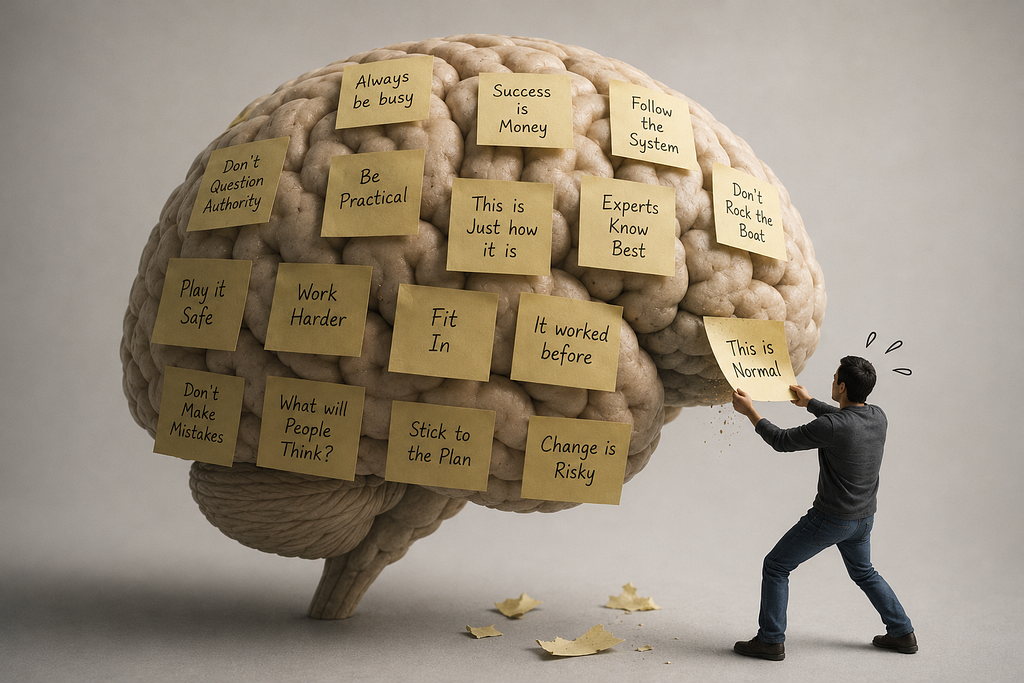
Learning is easy because it adds.
Unlearning is difficult because it removes.
When we learn something new, we gain knowledge.
When we unlearn something, we give up certainty.
And people do not like giving up certainty.
The longer we hold a belief, the more it becomes part of our identity. It is no longer just something we know. It becomes part of who we are.
If I tell someone they have more to learn, most people are open to the idea.
If I tell them that what they have believed for twenty years might be wrong, the conversation changes.
Now I am not challenging their knowledge.
I am challenging their experience.
Their reputation.
Their expertise.
Their identity.
That is why unlearning is emotionally expensive.
A coach may spend decades teaching a particular method.
A leader may build an entire management philosophy around certain assumptions.
An engineer may design every solution from the same mental model.
The more successful those ideas have been, the harder they become to question.
Because questioning them can feel like questioning yourself.
Many people would rather defend a belief than investigate it.
Not because they are dishonest.
Because they are attached.
Learning asks:
“What else can I know?”
Unlearning asks:
“What if what I know is no longer true?”
The first question creates curiosity.
The second creates discomfort.
That discomfort is exactly why unlearning is so rare.
And why it is often the beginning of real growth.
Whether in business, technology, leadership, or life, progress rarely comes from knowing more.
It often comes from letting go of what no longer serves us.
Strategic insight on IT leadership, risk, and decision systems.
Visit https://www.vyings.com
